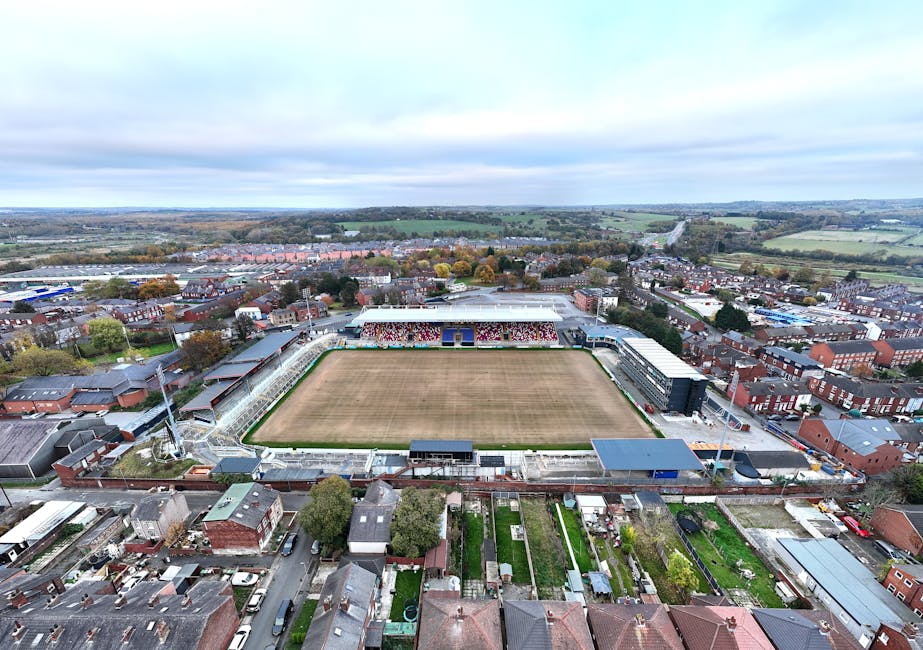
Brisbane Road clearance: Leyton Orient match-day waste plan
Match days around Brisbane Road can be brilliant. The atmosphere builds early, the streets fill with scarves and chatter, and by full time there's always a familiar problem: rubbish. Cup holders, food wrappers, bottle spillages, packaging, delivery waste, and the odd bulky item left behind all add up fast. A well-organised Brisbane Road clearance: Leyton Orient match-day waste plan is what keeps that energy from turning into a mess.
For clubs, local businesses, nearby residents, and event teams, waste management is not just about tidiness. It affects safety, access, kerbside loading, visitor experience, and the impression people take away from the area. A good plan reduces congestion before and after kick-off, helps crews work efficiently, and makes the whole match-day operation feel calmer. Truth be told, the difference is obvious within minutes.
This guide breaks down how a match-day clearance plan works, who needs one, what to watch out for, and how to approach it without overcomplicating things. If you are trying to understand the practical side of waste removal around Brisbane Road, you're in the right place.
For wider background on professional services in the area, you may also find the main clearance and waste removal service hub useful, along with the company's recycling and sustainability approach.
Table of Contents
- Why Brisbane Road clearance: Leyton Orient match-day waste plan Matters
- How Brisbane Road clearance: Leyton Orient match-day waste plan Works
- Key Benefits and Practical Advantages
- Who This Is For and When It Makes Sense
- Step-by-Step Guidance
- Expert Tips for Better Results
- Common Mistakes to Avoid
- Tools, Resources and Recommendations
- Law, Compliance, Standards, or Best Practice
- Options, Methods, or Comparison Table
- Case Study or Real-World Example
- Practical Checklist
- Conclusion
- Frequently Asked Questions
Why Brisbane Road clearance: Leyton Orient match-day waste plan Matters
Brisbane Road is not a normal working street on a match day. It becomes a live, shifting environment with foot traffic, vehicle movements, stewards, vendors, delivery teams, and people arriving at different times. Waste builds up quickly because the pace is fast and the volume is concentrated into a few hours. One unattended pile of packaging can become a trip hazard or a complaint before you know it.
A structured match-day waste plan matters for three simple reasons: safety, flow, and presentation. Safety covers litter, broken items, sharp edges, and obstructed walkways. Flow means bins, collections, and clearances do not get in the way of supporters or emergency access. Presentation matters because the first and last impression of a venue is often made by what people see on the pavement. And yes, people notice. They really do.
It also matters for the businesses nearby. A cafe spilling bins into the street, or trade waste left out at the wrong time, can frustrate neighbours and create avoidable tension. Good planning is simply more respectful. In our experience, the best waste plans are the boring ones. Not glamorous, but smooth.
Expert summary: A strong match-day waste plan is not about tidying up after a crowd. It is about preventing waste from interrupting the crowd in the first place.
Where a lot of people go wrong is treating match-day clearance like a one-off clean-up. It works better as a cycle: pre-match setup, live monitoring, immediate post-match collection, then a final sweep once the area settles. That rhythm is what keeps Brisbane Road manageable on busy fixtures.
How Brisbane Road clearance: Leyton Orient match-day waste plan Works
A practical waste plan starts before supporters arrive. That sounds obvious, but it is often the bit that gets squeezed. Crews should identify where litter will gather, where bins will be placed, and how waste will be moved without blocking people or vehicles. Around a football ground, the obvious hotspots are entrances, queueing points, food and drink outlets, smoking areas, and temporary catering setups.
The plan usually has four moving parts:
- Pre-match clearance - remove any leftover waste, broken items, and obstructions before the first arrivals.
- Live monitoring - keep an eye on bin fill levels and litter build-up during the match window.
- Post-match clearance - clear fast once the crowd disperses, especially around exits and pavements.
- Final check - sweep the perimeter, loading areas, and any temporary storage points.
That may sound straightforward, but timing is everything. A clearance team arriving too early can interfere with access. Arriving too late means waste becomes part of the crowd flow. Nobody wants bin bags wedged next to a queue for hot drinks at 6:45 pm in drizzle. Well, nobody sensible anyway.
For sites with broader operational waste needs, the same principles often overlap with business waste removal services and more general waste removal support. The difference is the timing and pace. Match days demand more coordination than a standard weekday collection.
In some cases, venue teams also need support with bulky items, temporary furniture, or storage clean-outs. That is where pages like furniture disposal and furniture clearance can be relevant, especially if temporary fixtures have to be removed quickly after an event.
Key Benefits and Practical Advantages
A proper match-day waste plan delivers benefits that go beyond a cleaner pavement. The first obvious gain is operational control. When everyone knows what happens, when it happens, and who is responsible, there is less confusion. That alone saves time.
Here are the most practical advantages:
- Safer walkways - fewer obstructions, fewer slip risks, and clearer routes for supporters and staff.
- Better crowd movement - bins and clearance equipment stay out of the way.
- Faster turnover after the match - the area returns to normal more quickly.
- Improved neighbour relations - less spillover waste and less complaint risk.
- Cleaner brand impression - the venue looks cared for, not neglected.
- More efficient staffing - no one is guessing where waste should go or who should remove it.
There is also a quieter benefit that people often miss: morale. If staff arrive to a tidy site, the whole evening feels more under control. If they arrive to overflowing sacks and sticky pavement patches, the shift starts badly. Simple as that.
For venues, clubs, and event contractors that care about environmental performance, a well-run clearance plan can support better segregation and more responsible disposal. That ties neatly into recycling-focused clearance practices, especially where packaging, cardboard, plastics, and reusable materials can be separated before final disposal.
Another advantage: fewer awkward last-minute scrambles. You know the sort. Someone phones at quarter to five asking if the loading bay is clear, where the bins are, and whether the cardboard has to be flattened. A proper plan saves everybody from that slightly frantic tone.
Who This Is For and When It Makes Sense
This kind of plan is useful for more people than you might first think. It is not only for the club itself. Anyone involved in match-day operations around Brisbane Road can benefit from a more structured clearance approach.
Who should think about it
- Venue operators who need reliable pre- and post-event clearance.
- Hospitality traders dealing with food packaging, drink waste, and temporary stock.
- Facilities teams managing loading areas, waste points, and shared access routes.
- Nearby businesses that experience high footfall and the waste that comes with it.
- Contractors and event crews working on temporary installations, signage, or fit-outs.
It makes sense when the area sees repeated high traffic, when waste builds up faster than a normal collection schedule can handle, or when access must be kept clear for emergency services and local traffic. It also makes sense if there have already been complaints about litter, missed collections, or poor post-event tidying. Lets face it, most people only realise the importance of a plan after the first messy weekend.
If you are a landlord, business owner, or property manager nearby, a related clear-out may also involve internal spaces. In those cases, a professional office clearance or even a broader home clearance service can help if storage rooms, back offices, or flats need a reset after busy periods.
Step-by-Step Guidance
A good plan is easier to run when it follows a repeatable sequence. Here is a practical way to think about it.
1. Map the waste points
Start with the real-world layout, not a generic checklist. Where do people queue? Where do bins overflow? Where do staff dump packaging when things get busy? Mark those spots on a site plan. If the venue has temporary kiosks or pop-up catering, include those too.
2. Set collection windows
Agree the timing for pre-match, halftime support if needed, and post-match clearance. Try to work around peak arrival and exit periods. The best time for moving waste is often the least glamorous one - the quiet gap in between.
3. Choose the right containers
Use bins that match the waste stream. Cardboard, general litter, food waste, and mixed recyclables should not all be treated the same way if you can avoid it. Label clearly and keep lids secure where possible, especially if wind is an issue.
4. Brief the team
Staff need to know who escalates issues, where waste is stored, and what to do if a collection point fills early. A five-minute briefing can prevent a half-hour mess later. Not fancy. Just effective.
5. Coordinate access
Make sure vehicles, trolleys, and lifting equipment can reach the right points without blocking supporters or breaching site safety rules. This is where timing and route planning matter more than most people expect.
6. Clear in layers
Do not leave everything for the final whistle. Smaller, routine clearances during the event reduce the size of the final job and keep the site calmer throughout the evening.
7. Review and improve
After the match, ask what filled first, where the bottlenecks were, and whether the crew had to improvise too much. Then adjust the next plan. Small improvements stack up.
For more complex jobs involving heavy or awkward waste, you may need support similar to builders waste clearance, particularly where temporary structures, offcuts, or event setup debris need safe removal.
Expert Tips for Better Results
There are a few habits that make a surprisingly big difference.
- Use the site the way supporters do. Walk the route at arrival time and again just after full time. You will spot pinch points that look fine on paper but behave differently in real life.
- Keep spare capacity. The mistake is always to plan for average footfall. Match days are not average.
- Separate wet and dry waste where possible. Damp cardboard and food waste can quickly become unpleasant, and much harder to handle later.
- Do a final sweep in daylight if possible. Early evening light can hide small hazards. A quick look at 5 pm may miss what becomes obvious at 8 pm.
- Use clear labels and simple instructions. People comply more easily when the system is obvious.
A small but useful trick: place one person in charge of "last five minutes" checks. That person is not there to do everything. Just to notice what everyone else has become blind to. It sounds minor, but it saves a lot of missed bits.
Where safety is concerned, it also helps to use suppliers that understand site conditions and route discipline. Pages like health and safety guidance and insurance and safety information are worth reviewing before assigning a contractor to a busy event environment.
And if you are arranging waste work on a budget, do not guess. Ask for a proper breakdown via pricing and quotes. That is usually the simplest way to avoid surprises, especially when the job involves timing constraints or awkward access.
Common Mistakes to Avoid
Most waste issues around match days come from predictable mistakes. The good news? They are usually fixable.
Leaving clearance until after the crowd has peaked
This creates congestion and makes the job harder. Waste should be removed before it becomes part of the crowd flow.
Underestimating how fast bins fill
A few busy food or drink points can overwhelm standard capacity quickly. If you have ever watched a bin go from half full to overflowing in ten minutes, you will know the feeling.
Using the wrong route
Even a short route can become awkward if it crosses a queue line, a delivery point, or a pedestrian pinch point. Keep routes simple and repeatable.
Not briefing casual or temporary staff
Everyone on site should know the basics. Assumptions cause delays.
Ignoring contaminated recyclables
Once wet food waste mixes with clean cardboard, the recycling options can narrow. Separate early if you can.
Forgetting the nearby perimeter
Waste does not stop at the venue boundary. Side streets, alleys, and loading areas often need attention too.
A slightly old-school habit still works well: walk the same route you intend to clear, with an actual bag in hand. Suddenly the awkward corners reveal themselves. Funny how that happens.
Tools, Resources and Recommendations
You do not need a huge kit, but you do need the right basics.
| Tool / Resource | Why it helps | Best used for |
|---|---|---|
| Heavy-duty bins or sacks | Handles higher volumes without splitting | General litter and mixed waste |
| Labelled recycling containers | Makes sorting easier for staff and contractors | Cardboard, plastics, and dry recyclables |
| Route map or site plan | Reduces confusion and wasted movement | Pre-match planning and access control |
| PPE such as gloves and hi-vis | Supports safer handling and visibility | Working near busy pedestrian areas |
| Communication checklist | Keeps handovers consistent | Shift changes and event briefings |
| Reliable contractor contact | Speeds up issue resolution | Last-minute timing changes or overflow |
For organisations that handle repeated clearances, it often helps to have a standing relationship with a local provider rather than booking ad hoc every time. That makes it easier to maintain routine, keep standards consistent, and avoid rushed decisions. If the job includes a mix of indoor and outdoor work, the right fit might also involve flat clearance or house clearance services for adjacent premises or upper floors that need clearing at the same time.
If you want to keep the process more accountable, use a short post-event log. Keep it basic: what waste types were collected, when the collections happened, and what problems cropped up. That simple record is gold next time round.
Law, Compliance, Standards, or Best Practice
Any match-day waste plan needs to sit comfortably within normal UK waste handling expectations, site safety duties, and local access arrangements. The exact legal responsibilities will depend on the location, the nature of the waste, and who controls the site. So this is one of those areas where caution matters more than bravado.
In practice, the main points to think about are:
- Waste should be handled responsibly and passed to an appropriate carrier or disposal route.
- Walkways and exits should stay clear, particularly around public access and emergency routes.
- Workers should have suitable safety measures such as safe lifting practices, visible clothing where needed, and sensible traffic awareness.
- Recycling and segregation should be followed where practical, especially for clean cardboard and packaging.
- Contractors should be credible and insured, with clear terms and contact details.
If you are checking a provider, it is sensible to review pages such as terms and conditions, privacy policy, and payment and security information. Those pages do not make the waste go away, obviously, but they do help you understand how the service is run.
For businesses and venues that care about ethics and supplier oversight, it can also be worth reading the company's modern slavery statement. It is a good signal that the supplier is taking broader responsibility seriously, not just turning up with a van and a smile.
Best practice is often simple: keep the plan documented, keep responsibilities clear, and do not assume "someone else sorted it." That sentence causes more issues than people like to admit.
Options, Methods, or Comparison Table
There are several ways to manage match-day waste around Brisbane Road. The right choice depends on footfall, budget, site access, and how much control you want over the process.
| Method | Strengths | Limitations | Best For |
|---|---|---|---|
| Ad hoc clear-up | Quick to arrange | Less predictable, higher risk of missed waste | Small, occasional needs |
| Scheduled event clearance | More reliable and easier to coordinate | Needs planning ahead | Regular match-day operations |
| On-site waste stewarding | Good for live monitoring and overflow prevention | Costs more and needs staffing | Busy fixtures and busy zones |
| Mixed service package | Covers removal, sorting, and post-event sweep-up | May be more than a small site needs | Complex or multi-zone venues |
For many organisations, the sweet spot is scheduled clearance with some live oversight. It gives you structure without turning the whole thing into a major production. That tends to be the practical answer, even if it is not the most dramatic one.
Case Study or Real-World Example
Here is a realistic example. Imagine a small hospitality operator near Brisbane Road that serves food and drinks on match days. On busy fixtures, cardboard drink trays, food packaging, and mixed litter start piling up around the side access and rear collection point. At first, the team tries to manage everything with a single end-of-evening sweep. It works, sort of, but the site looks messy during peak turnover and staff keep stepping around sacks.
They then switch to a simple three-part plan: a pre-match tidy-up, a mid-event bin check, and an immediate post-match collection. They also separate dry cardboard from general waste, which makes handling easier and keeps the back area less chaotic. Nothing dramatic changes, but the result is better almost straight away. Staff move more freely, the rear lane stays usable, and the site looks less exhausted at the end of the evening.
That is the thing with waste planning. The biggest gains usually come from boring discipline, not from fancy equipment. A clear route, a clear role, and a clear finish time can change the whole feel of a match day.
For properties and commercial spaces adjacent to the ground, the same approach can extend to garage clearance or loft clearance if stored items or seasonal stock are creating access issues. Not every job is a stadium job, of course, but the discipline is similar.
Practical Checklist
Use this before and after the match.
- Confirm the site map and access routes.
- Identify all waste points, including temporary ones.
- Set collection timings around arrival and departure peaks.
- Check bin capacity and label waste streams clearly.
- Brief staff on responsibilities and escalation points.
- Keep emergency routes and loading areas unobstructed.
- Have gloves, sacks, and PPE ready before kick-off.
- Carry out a post-match perimeter sweep.
- Record any problem spots, overflow issues, or missed items.
- Review what needs changing for the next fixture.
Quick reminder: the best waste plan is the one people can actually follow under pressure. If it feels too clever, it probably needs simplifying.
Conclusion
A sensible Brisbane Road clearance: Leyton Orient match-day waste plan keeps the area safer, tidier, and easier to manage when the crowds arrive. It helps the venue, nearby businesses, and local residents by reducing clutter, improving access, and making clean-up far less stressful than it would otherwise be.
The key is not perfection. It is rhythm. Plan the route, time the collections, brief the team, and leave enough capacity for the reality of a busy football night. Do that well, and the whole operation feels lighter. Less scramble, more control. That is what you want.
If you are comparing service options or planning your next fixture, start with a clear scope and a proper quote so you know exactly what is included and when. It saves time, money, and a fair bit of hassle.
Get a free quote today and see how much you can save.
And if you are still refining the process, that is fine too. The best local plans are built one match at a time, with a bit of patience and a steady hand.
Frequently Asked Questions
What is a Brisbane Road clearance: Leyton Orient match-day waste plan?
It is a planned approach to collecting, moving, and disposing of waste around Brisbane Road before, during, and after a Leyton Orient match. The aim is to keep routes clear, reduce litter, and make the area safer and easier to manage.
Why does match-day waste need a separate plan?
Because match-day waste happens faster and in a more concentrated way than normal day-to-day rubbish. You get higher footfall, tighter timing, and more pressure on access points, so a standard collection routine is usually not enough.
Who normally manages the waste plan?
It depends on the site, but it is often shared between venue management, facilities teams, hospitality operators, and external clearance contractors. The important thing is that responsibilities are clearly assigned.
How early should waste clearance start before kick-off?
Usually before supporters begin arriving in volume. The exact timing depends on the site, but the key is to avoid clashing with peak pedestrian flow or vehicle access.
Can match-day waste be recycled?
Often, yes, at least some of it can. Clean cardboard, certain packaging, and dry recyclables may be separated if the site setup allows it. Contaminated or food-soiled items may need a different route.
What happens if bins overflow during the match?
That usually means the plan needs more capacity, more frequent monitoring, or a better container layout. Overflow is a sign to adjust the system, not just to tidy up faster at the end.
Is this only for the football club itself?
No. Nearby businesses, event contractors, landlords, and facilities teams can all benefit from a clearer waste plan, especially on busy match days when the whole area is under pressure.
How do I know what kind of waste service I need?
Start by looking at the type of waste, the amount, the access restrictions, and how quickly it needs removing. If the job is recurring, a scheduled service is often better than a one-off collection.
What should I ask a waste contractor before booking?
Ask what is included, how access will be managed, what happens with recycling, whether they are insured, and how pricing is structured. It is also sensible to ask how they handle timing changes on event days.
Do I need to worry about safety and compliance?
Yes, especially if waste movement affects public access, loading bays, or emergency routes. You should follow normal site safety practices, use suitable PPE where needed, and make sure the contractor is legitimate and insured.
What is the biggest mistake people make with match-day waste planning?
Leaving everything until after the crowd has gone. That creates more clutter, makes the site harder to navigate, and usually means the clean-up takes longer than it should.
How can I make the plan work better next time?
Review what filled up first, where waste gathered unexpectedly, and whether staff had enough information. Small adjustments often make the biggest difference. A little tweak here, a better route there, and suddenly the whole thing runs smoother.
If you need support with related premises or overflow spaces, it can also help to explore the wider service pages on about the team and contact options for practical next steps.